
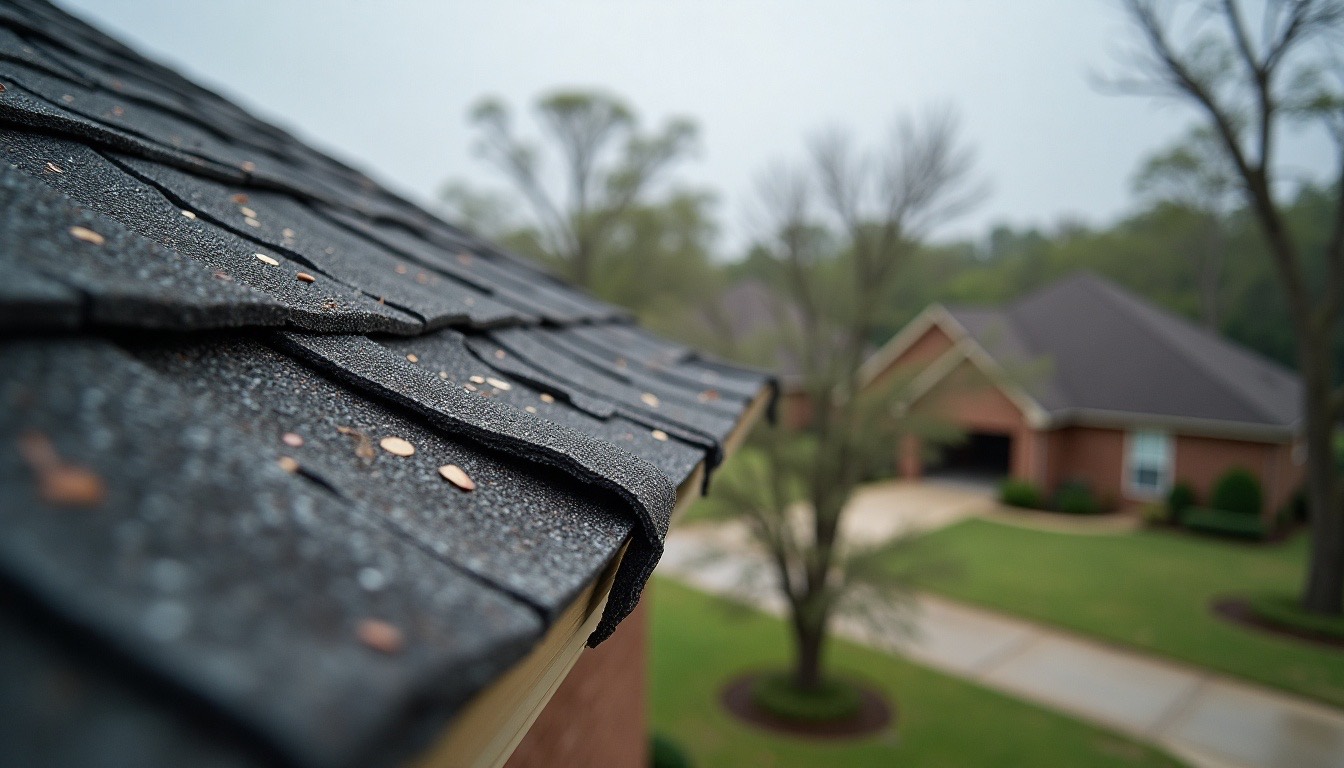
Storm Damage Leak Repair
March through May is the main event, November is the encore, and late August through September brings whatever the Gulf sends north. Storm damage roof leak repair in Tuscaloosa runs on that calendar, and so do we. Wind-driven rain finds the flashing that was already weak, hail bruises the shingles that were already old, and a tree limb does not care how old anything is.
We tarp first, trace the leak, and give you a written price with an honest answer on whether it is worth a claim.
The Tuscaloosa storm calendar
Spring severe-weather season runs March through May, when fronts out of the southwest bring 50 to 70 mph straight-line wind, hail, and the occasional tornado. April 27, 2011 is the date everyone here remembers, and the rebuild roofs from that year are now 15 years old.
November is the secondary window, a shorter burst of the same pattern before winter.
Late summer brings the remnants of Gulf tropical systems. Winds are lower, but the rain comes sideways for 6 to 12 hours, which is exactly the test that chimney flashing and pipe boots fail.
Tuscaloosa gets about 55 inches of rain a year in total. That is 20 inches more than Chicago and it arrives in fewer, harder events.
The practical point is timing. A roof that gets checked in February goes into the spring season with new boots and sealed flashing. A roof that gets checked in April gets checked in the rain with a tarp on it. If you own a 13-to-15-year-old roof, the inspection is cheaper in the off season and the repair schedule is open.
How wind-driven rain gets in
A roof is built to shed water running downhill. Wind-driven rain goes uphill. A 60 mph gust pushes water up under the exposed edge of a shingle, under the lip of a vent flange, and up behind the counterflashing on a chimney. On a newer roof with sealed shingles and intact flashing it drains back out. On a 13-to-15-year-old roof in Alberta or Holt where the shingle seal strips have let go and the boots are cracked, it does not.
Wind also lifts. Shingles that have lost their seal flap in a gust, crease along the nail line, and either tear off or sit back down with a permanent crack. A creased shingle does not look like damage from the yard. It leaks the next time it rains.
The other path is the gable end. Tuscaloosa houses with gable vents facing the southwest take rain directly through the louvers in a sideways storm, and it lands on the attic floor and the ceiling below. That is not a roof leak, but it stains like one, and we check for it on every post-storm trace so you do not pay to fix a roof that was never the problem.
Soffit vents do the same on a low eave facing the wind. A storm that leaves a line of drips along one outside wall is usually telling you which direction the rain came from, not where the roof failed.
Hail: what it does and does not do here
West Alabama hail is usually 1 inch or under. It is frequent, but it rarely punches through a shingle. What it does is knock granules off and bruise the mat, which shortens the life of the shingle and, on a roof that is already 15 years old, can open a leak at a thin spot within a season.
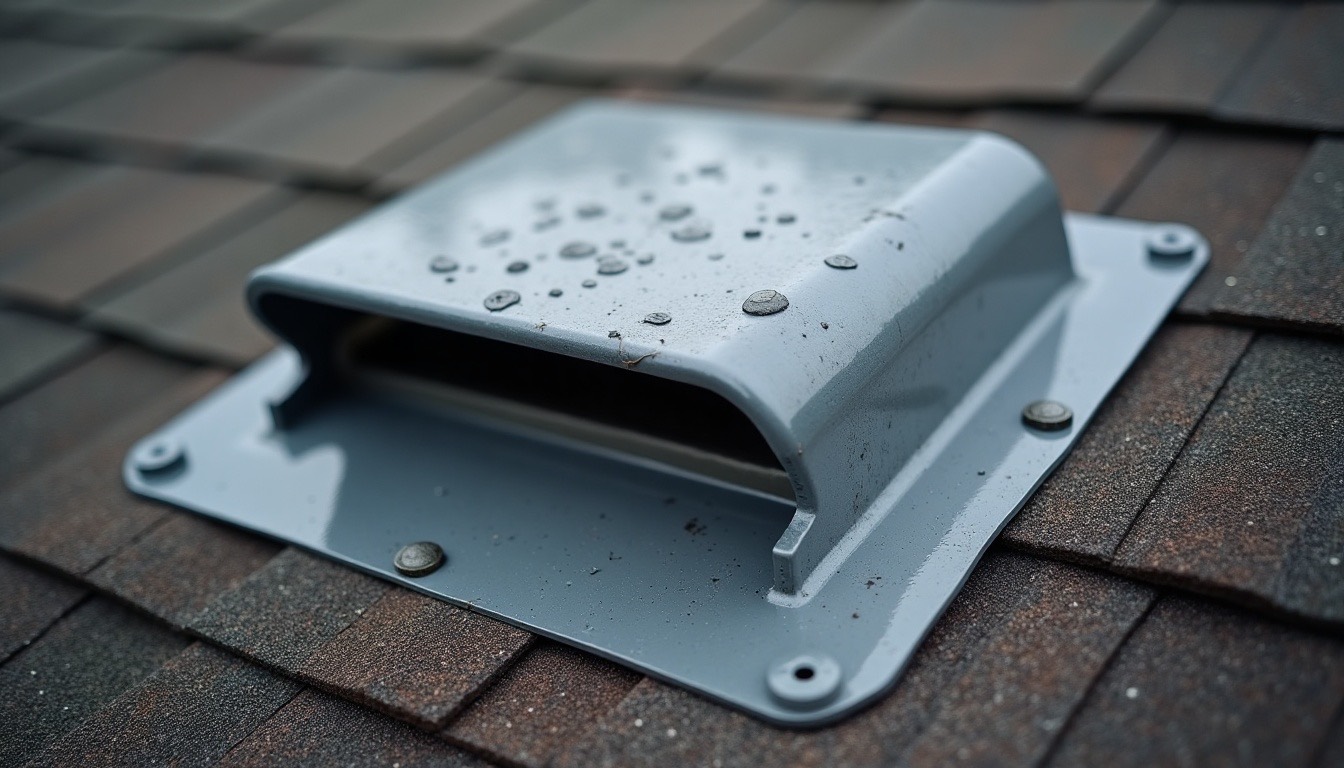
Hail dents metal: vent caps, drip edge, gutters, AC fins. Those dents are the evidence adjusters look for. If you have them, the shingles probably took hits too. We mark hail hits with chalk, photograph them with a scale, and count per 10-by-10 test square the way an adjuster does.
What hail does not do here is total a roof every spring. The 1-inch-and-under hail common in west Alabama bruises; it rarely fractures. A roofer who shows up after every storm telling the whole street they need a new roof is counting on the deductible math working in his favor, not yours. We count the hits, show you the chalk marks, and tell you whether what we found is a repair, a claim, or nothing.
Deductible math: claim or pay
Alabama homeowners policies increasingly carry a separate wind and hail deductible of 1 to 5 percent of the dwelling coverage. On a $250,000 house that is $2,500 to $12,500 before insurance pays a dollar. A $700 repair for lifted shingles and a cracked boot is below that line on almost every policy in Tuscaloosa County, which means filing a claim gets you nothing except a claim on your record.
So we quote storm repairs as out-of-pocket jobs first, with a written price. If the damage is in the thousands, a tree is through the decking, or the shingles are hail-bruised across whole slopes, we say so, give you the photo documentation an adjuster needs, and meet the adjuster on the roof if you want us to. We do not chase claims and we do not inflate scopes to clear a deductible.
If you do file, we provide the photo set, the test-square counts and a written scope, and we do the repair at the price we quoted, not a price that appeared after the adjuster's number came in.
From tarp to permanent repair
Tarp in daylight the day you call, battened down with 1x3s so it survives the next band.
Attic trace to find every active entry point, not just the obvious one. Storms often open two or three.
Written price covering decking, underlayment, matched shingles, and any boot, vent or flashing that was damaged. Storm repairs in Tuscaloosa typically run $450 to $2,800 depending on how much decking is involved.
Permanent repair in the first dry window, usually 3 to 5 days after the tarp. After-photos for your file or your adjuster.
We also check the rest of the roof while we are there, because a storm that lifted shingles on one slope usually loosened a few on the others, and finding those now is cheaper than finding them in November.
The 2011 roofs are 15 years old now
Thousands of roofs in Alberta, Forest Lake, Rosedale, Holt and along 15th Street went on in a hurry between 2011 and 2013. Many were three-tab shingles installed by out-of-town crews in a labor shortage. They are now in the 13-to-15-year window where seal strips fail, boots crack and nails back out, which is why the same streets fill our schedule after every spring front. If your roof is one of them, a pre-season inspection in February is cheaper than a tarp in April.
Storm got the roof?
Send the form with a photo from the yard and one of any water inside. You get a tarp in daylight, a trace, and a written price with a straight answer on claiming.